How to Build a Fashion Illustration Portfolio From Scratch (Even If You're Just Starting Out)
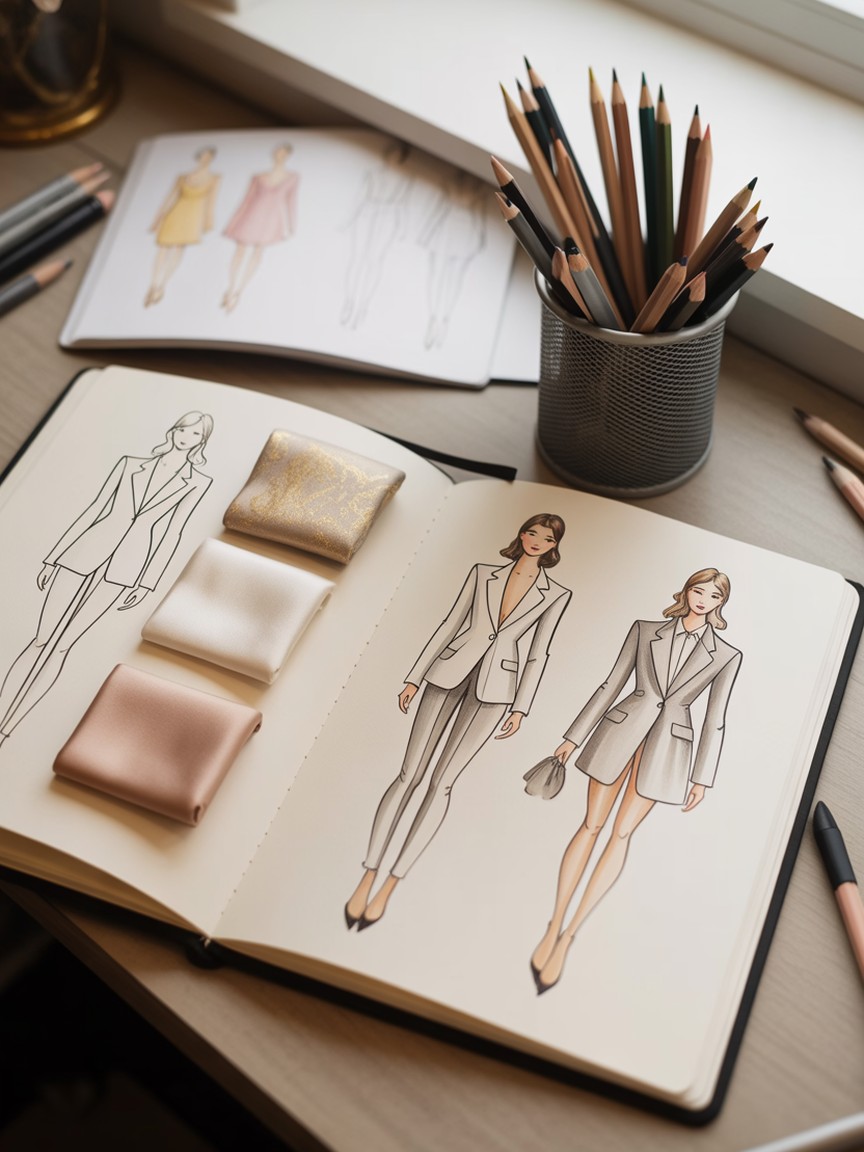
You do not need years of experience to build a fashion illustration portfolio that gets noticed. What you need is a clear plan, consistent practice, and the right pieces to show your range. Whether you are applying to a design program, pitching to a brand, or simply building a body of work you are proud of, this guide walks you through the essentials.
Start With Strong Croquis Foundations
Every fashion illustration portfolio begins with the figure. Before you design garments, you need a confident, consistent pose to build from. Choose two or three go-to croquis poses, a front view, a three-quarter view, and a walking pose, and practice them until they feel natural.
A well-proportioned croquis is not just about long legs. It is about rhythm: the tilt of the shoulders, the shift of the hip, the weight of the body over one foot. Once your figures feel alive on the page, your garments will drape and move more convincingly. If your proportions still feel inconsistent from sketch to sketch, work through our 9-head proportion system guide before you start committing pages to your final portfolio.
If you are just starting out, tracing over reference croquis templates is a completely valid way to build muscle memory. Many professional illustrators begin this way. The goal is to internalize the proportions so you can eventually draw from imagination, and every finished piece in your portfolio should look like it came from the same hand.
Choose a Cohesive Theme
Recruiters and admissions panels flip through dozens of portfolios in a sitting. What makes yours memorable is a point of view. Before you start drawing, choose a theme that ties your collection together.
Some strong options for beginners:
- A single season: Design a six-piece capsule for fall, or a resort collection for summer.
- A cultural inspiration: Explore a textile tradition, a city, or an art movement as your reference.
- A silhouette story: Show how one shape, oversized shoulders, for example, evolves across multiple garments and occasions.
A cohesive theme does not mean every piece looks the same. It means every piece feels like it belongs in the same world. Ten pieces built around a single idea will read as a stronger collection than twenty unrelated sketches, even if the individual drawing quality is identical.
Show Your Process, Not Just the Result
Finished illustrations are impressive, but process work is what proves you can think. Include rough sketches, fabric swatches, color palette explorations, and mood board fragments alongside your polished plates.
This does not need to be elaborate. A single page of thumbnail sketches beside your final croquis tells a story about how your mind works as a designer. That is exactly what a portfolio reviewer wants to see: not just what you can draw, but how you get there. Pair the process page with a finished fashion flat of the same garment and you have shown the full arc, from first idea to production-ready drawing, on a single spread.
Vary Your Rendering Techniques
Even if you prefer working digitally, include at least one or two hand-rendered pieces. Mixing media, pencil, marker, watercolor, gouache, demonstrates versatility and a genuine connection to the craft.
Within each piece, push your rendering to show material qualities: the sheen of satin, the bulk of a wool coat, the transparency of organza. Fabric rendering is one of the fastest ways to elevate a portfolio from student-level to professional, so do not settle for flat color fills on your strongest pieces. Give at least one garment in your collection a fabric that forces you to solve a real rendering problem, and let that piece anchor the whole book.
Keep It Edited
Twelve strong pieces beat twenty-five mediocre ones every time. A lean portfolio signals confidence and self-awareness. Include only the work you are genuinely proud of, and retire anything you feel the need to apologize for out loud when someone flips to it.
If you are unsure which pieces to cut, ask yourself: does this piece show something the others do not? If the answer is no, leave it out. It is a hard habit to build, but it is the single biggest difference between a portfolio that feels like a sketchbook dump and one that feels curated.
Sequence the Pages Like a Story
Once you know which pieces are making the cut, the order you present them in matters almost as much as the drawings themselves. Open with your single strongest image, the one that makes a reviewer want to keep turning pages, not with your oldest or most cautious piece just because it came first chronologically. Close on your second strongest. The middle is where process pages, flats, and detail studies belong, so the reviewer's attention curve rises again right before the end.
If you are building both a physical book and a digital portfolio, treat them as two different objects rather than the same file exported twice. A printed portfolio rewards large, high-resolution spreads and physical texture, while a PDF or website version needs to read well at thumbnail size, since that is often the first impression a busy art director gets. Keep file names, page order, and framing consistent across both so your presentation feels considered rather than assembled at the last minute.
A Portfolio Is Never Finished
The best fashion portfolios are living documents. Add new work every month, swap out weaker pieces as your skills improve, and let your voice evolve. The goal is not to create a perfect archive, it is to reflect where you are right now and where you are headed. For the practical side of turning that portfolio into paid work, our guide on becoming a fashion illustrator covers what happens after the pages are ready.
Start today with the croquis template you have, the markers on your desk, and the idea that has been sitting in your sketchbook. The portfolio builds itself, one figure at a time.
Recommended Supplies for Portfolio Work
For Rapid Process Sketches
Strathmore 400 Series Sketch Pad is cheap enough per page that you will fill it fast with the thumbnails and idea sketches that make your process pages feel honest.
For Under-Drawing Guidelines
Prismacolor Col-Erase Pencils (24-pack) lay down light, erasable guides for your croquis before you commit to a final line, keeping proportions consistent across the whole collection.
For Clean Final Linework
Sakura Pigma Micron Set (6 pens) gives your polished portfolio plates the crisp, confident outline that separates a finished piece from a sketch.
For Full-Color Rendering
Copic Sketch Markers are the industry standard for smooth, professional-looking fabric rendering on your strongest, most detailed pieces.
Build the Figure Skills Behind Your Portfolio
Our Fashion Croquis Template Sketchbook: Paris Edition gives you 300 pages of light grey 9-head figure templates with scenic Paris backgrounds. Sketch your capsule collection on consistent, professional proportions from page one.
Get the Paris EditionSome links above are affiliate links. If you purchase through them, we may earn a small commission at no extra cost to you. We only recommend products we genuinely use or believe in.