The Essential Fashion Illustration Supply Guide: What You Actually Need (And What You Don't)
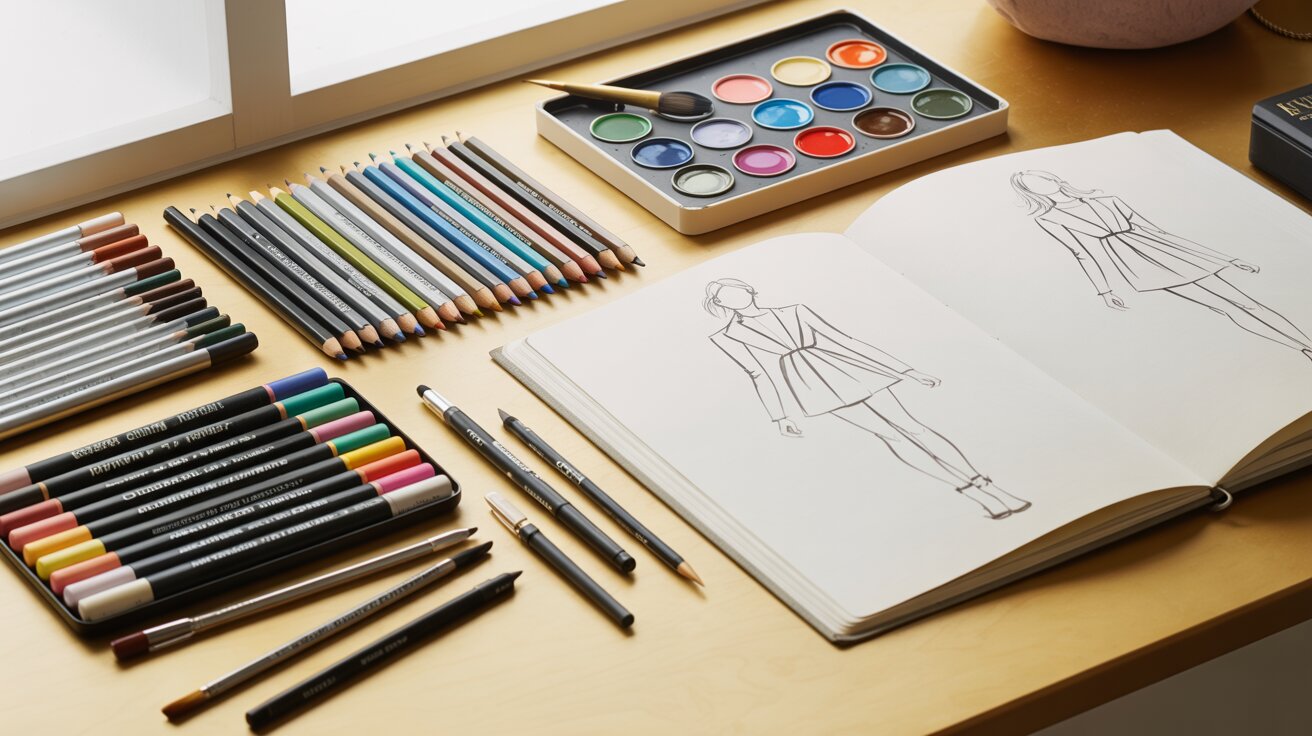
Every fashion illustration tutorial on the internet starts the same way: "First, you'll need supplies." Then comes a list of 47 products, half of which cost more than your rent. Here's the truth nobody tells you: you can create professional-quality fashion illustrations with surprisingly few tools. The key is knowing which supplies actually matter, which are nice-to-have, and which are pure marketing. We tested and compared the most popular options so you don't have to blow your budget figuring it out.
Before You Buy Anything: Understanding How Fashion Illustration Actually Works
Fashion illustration isn't one technique. It's a sequence of stages, and each stage benefits from different tools. Understanding this workflow will save you from buying supplies you don't need yet.
The typical workflow goes: rough sketch (loose gesture, proportions) to refined drawing (clean lines, garment details) to inking (permanent outlines) to color and rendering (markers, paint, or digital). Some illustrators stop at the pencil stage. Others skip straight to ink. Your supplies should match how you actually work, not some idealized version of what you think you should be doing.
With that in mind, let's build your toolkit from the ground up.
Pencils: Where Every Fashion Sketch Begins
You need exactly two types of pencil to cover almost every fashion illustration scenario: a light, hard pencil for initial construction lines, and a softer pencil for refined drawing and shading.
The Professional Standard: Staedtler Mars Lumograph
These blue pencils are a staple in fashion design programs and professional studios. The Staedtler Mars Lumograph set ($15) gives you 12 grades from 6B to 4H, which is far more range than you'll ever need for fashion work.
For fashion illustration specifically, you'll reach for three pencils most often:
- 2H or H: Light construction lines for your croquis framework. These draw faint enough that they disappear under darker work, eliminating the need to erase your guidelines.
- HB: Your workhorse. Clean enough for refined lines, dark enough to see clearly. Most of your garment detailing happens here.
- 2B or 4B: Soft shadows, fabric folds, and dramatic shading. The wax-heavy core glides across paper and blends beautifully with a tortillon or even your finger.
Why Staedtler over other brands? Consistency. Every pencil in the range performs exactly as its grade promises. The cores are centered (so they don't break unevenly when sharpening), and they erase cleanly. That last point matters more than you'd think when you're building a figure on construction lines that need to vanish later.
The Secret Weapon: Prismacolor Col-Erase
Here's a tool that doesn't appear in most beginner guides but is beloved by professional fashion illustrators: the Prismacolor Col-Erase set ($17 for 24 colors). These are colored pencils that actually erase, and they're a game-changer for fashion work.
The technique works like this: sketch your croquis in light blue Col-Erase (traditionally called "non-photo blue" because it wouldn't show up in photocopies, a trick borrowed from animation studios), then draw your garment design over it in a warmer color like terracotta or carmine red. Modern scanners can pick up the blue, but the visual separation while you're working is what makes this technique so useful. You end up with a layered sketch where the body structure and the clothing design are visually separated. It's faster than erasing graphite construction lines, and the results look more intentional.
Many fashion illustrators use this method for quick concept sketches. The colored under-drawing reads as "loose and creative" rather than "unfinished," which is exactly the energy you want when presenting initial ideas.
Pens: Making Your Lines Permanent
Once your pencil sketch is solid, you'll want to ink it. Ink lines are crisper, reproduce better, and give your illustrations that polished editorial quality. But not all pens are created equal for fashion work.
The Industry Standard: Sakura Pigma Micron
The Sakura Pigma Micron set ($12 for 6 pens) is the default recommendation for a reason. The archival-quality pigment ink is waterproof once dry (critical if you plan to add watercolor or markers later), it doesn't bleed through most papers, and the felt tips hold their shape through heavy use.
For fashion illustration, you'll use these sizes most:
- 005 (0.20mm): Delicate details like stitching lines, button threads, fabric texture marks, and fine hair strands.
- 01 (0.25mm): Your primary outlining pen for garment construction, seams, and medium details.
- 05 (0.45mm): Bold outlines for the figure silhouette. This is the line that separates your illustration from the background and gives it that graphic, editorial punch.
- 08 (0.50mm): Dramatic fashion illustration uses this for the outer contour while keeping interior lines lighter. It's the technique behind that "fashion sketch" look you see in magazines.
The varying line weight is what separates amateur fashion sketches from professional ones. A single-weight outline looks flat. A sketch where the outer contour is bold and the interior details are fine looks dynamic and intentional. This is the single most impactful technique improvement for beginner illustrators, and Microns make it easy because each pen is a fixed width.
Alternative Worth Knowing: Brush Pens
For a looser, more expressive style, consider adding a brush pen to your lineup. The Pentel Pocket Brush Pen ($10-15 at most art stores) creates thick-to-thin lines based on pressure, giving you that fluid, gestural quality you see in runway sketches. It takes practice to control, but the results have an energy that technical pens can't replicate.
Markers: Where Fashion Illustration Gets Colorful
Markers are where most people overspend. Let's be direct about the options.
The Gold Standard: Copic Sketch Markers
The Copic Sketch 72-color set ($202) is widely considered the gold standard for fashion illustration. The alcohol-based ink blends seamlessly, the brush nib allows both broad strokes and fine details, and every marker is refillable, which means your initial investment pays off over years of use.
For fashion illustration, Copics excel at rendering skin tones (the E series has an unmatched range of warm and cool flesh tones), fabric textures (the brush nib can mimic silk sheen with a single confident stroke), and layered color builds (you can go from pale wash to saturated hue by adding layers without muddying).
Our honest take: Copics are worth every penny if you illustrate regularly and need consistent, professional results. They are not worth it if you're just starting out and still figuring out whether fashion illustration is your thing. A $200 marker set collecting dust is just expensive regret.
The Best Budget Alternative: Tombow Dual Brush Pens
The Tombow Dual Brush 10-pack ($25) is our recommendation for illustrators who want color without the Copic commitment. These are water-based, which means different blending behavior (use a water brush to blend, rather than layering), but the color vibrancy is excellent and the flexible brush tip gives you good line variation.
Tombows won't replace Copics for professional presentation work. But for practice, experimentation, social media content, and developing your color instincts, they're fantastic. Many professional illustrators keep both: Copics for client work, Tombows for quick sketches and personal projects.
What About Prismacolor Markers?
They exist, they're mid-range priced, and they're fine. But they sit in an awkward middle ground: not cheap enough to be a casual starter set, not performant enough to rival Copics for professional use. If you're going to spend $60-100 on markers, we'd say either save up for a smaller Copic set or start with Tombows and put the difference toward better paper.
Paper: The Most Underrated Supply Decision
Here's where beginners almost always go wrong. They'll spend $200 on Copics and then use them on copy paper, which bleeds, feathers, and destroys the marker nibs. Paper matters enormously, and the right paper for your medium will make your work look dramatically better.
For Pencil and General Sketching
The Strathmore 400 Series Sketch Pad ($13 for 100 sheets, 9x12") is the workhorse of fashion school. The 60lb weight has enough tooth to grab graphite and colored pencil without being so textured that it fights your pen lines. It's heavy enough to handle light marker work and thin enough for a lightbox (useful for tracing your croquis templates).
For daily practice sketching, this pad is hard to beat on value. 100 sheets means you won't feel precious about each page, which is exactly the mindset you need when developing your drawing skills. Treat your sketchbook like a gym, not a gallery.
For Marker Rendering
If you're using alcohol markers (Copics or similar), you need marker-specific paper. The Canson XL Marker Pad ($16 for 100 sheets, 9x12") is purpose-built for this. The ultra-smooth surface prevents feathering, the weight stops bleed-through, and the semi-translucent quality works with lightboxes.
The difference between Copics on copy paper and Copics on marker paper is honestly shocking. On copy paper, the ink spreads unpredictably and colors look muddy. On marker paper, every stroke stays exactly where you put it, edges are crisp, and blending is controlled. If your marker work looks messy or uncontrolled, switch paper before you blame the markers.
For Mixed Media and Final Pieces
When you're creating a finished illustration that combines pencil, ink, markers, and maybe some watercolor or gouache, step up to the Canson XL Mix Media Pad ($18 for 60 sheets, 9x12"). The 98lb weight handles wet media without buckling, accepts ink cleanly, and has a versatile surface that works with everything from graphite to gouache.
This is the pad you pull out for portfolio pieces, client presentations, and anything you might want to frame or photograph for your social media. For daily sketching it's overkill (and too expensive to burn through), but for finished work it makes a real difference.
Paint: For When Markers Aren't Enough
Some fashion illustration techniques call for paint rather than markers. Two options stand out for fashion work specifically.
Gouache: The Fashion Illustrator's Paint
Gouache has a long history in fashion illustration, dating back to the golden age of editorial art in the mid-20th century. René Gruau used gouache alongside ink and watercolor for his iconic Dior advertisements. The medium's flat, opaque, velvety finish produces that distinctive editorial look still associated with high-end fashion imagery.
The HIMI Gouache 24-color set ($25) is a remarkable value for beginners and intermediate artists. The jelly-cup format stays moist between sessions (a common complaint with tube gouache is dried-out paint), the pigmentation is surprisingly rich for the price, and 24 colors gives you enough range for most fashion illustration needs.
Professional illustrators may eventually upgrade to Winsor & Newton or Holbein gouache, but HIMI is an excellent starting point that doesn't require a significant financial commitment to explore the medium.
Liquid Watercolor: For Flowing, Editorial Effects
For a more ethereal, flowing look, Dr. Ph. Martin's Hydrus Liquid Watercolors ($50 for Set 1) produce the kind of luminous, transparent washes that look stunning in fashion context. A single drop of concentrated color in water creates flowing fabric effects that are almost impossible to achieve with markers. The colors are vivid, lightfast, and mix beautifully.
This is a specialized tool, not a starter purchase. But if you've been illustrating for a while and want to develop a distinctive style, liquid watercolors offer a look that's genuinely unique and stops people mid-scroll on Instagram.
Building Your Kit: Three Budget Tiers
Rather than telling you to buy everything at once, here are three practical starting points.
The Starter Kit (~$55)
- Staedtler Mars Lumograph 12-set ($15)
- Sakura Pigma Micron 6-set ($12)
- Strathmore 400 Sketch Pad ($13)
- Canson XL Marker Pad ($16)
This covers pencil sketching, inking, and gives you two paper options for different stages of work. You can create polished black-and-white fashion illustrations with just these four items, and many professional illustrators work primarily in black and white.
The Intermediate Kit (~$125)
Everything above, plus:
- Prismacolor Col-Erase 24-set ($17)
- Tombow Dual Brush 10-pack ($25)
- HIMI Gouache 24-set ($25)
Now you have colored under-drawing capability, two marker/color options, and a paint medium to experiment with. This kit lets you try multiple illustration styles and figure out what resonates with your natural tendencies before investing heavily in any single direction.
The Professional Kit (~$400+)
Everything above, plus:
- Copic Sketch 72-set ($202)
- Dr. Ph. Martin's Hydrus Set 1 ($50)
- Canson XL Mix Media Pad ($18)
At this level, you have every tool needed for any fashion illustration technique. Copics for clean, professional marker rendering. Liquid watercolors for editorial effects. Mixed media paper for finished presentation pieces. This is the full studio setup.
What You Don't Need (Despite What the Internet Says)
A few things that are commonly recommended but genuinely unnecessary:
A massive colored pencil set. If you want colored pencils for fashion illustration, the Prismacolor Premier 72-set ($75) is excellent. But colored pencils and markers serve similar functions in fashion illustration, and most illustrators gravitate toward one or the other. Don't buy both until you know which you prefer.
Expensive mechanical pencils. A $2 mechanical pencil with 0.5mm HB lead works identically to a $30 one for fashion sketching. Save the premium for tools where quality actually affects your output.
"Fashion illustration" branded kits. These pre-assembled kits marketed specifically to fashion students are almost always worse value than buying individual supplies. They include filler items you won't use and skimp on the tools that matter. Build your own kit.
A lightbox (at first). Lightboxes are useful for tracing croquis templates, but a bright window works just as well. If you get serious about template-based illustration, a $20 LED tracing pad from Amazon will do the job. The $100+ models are for animation studios, not fashion sketching.
Taking Care of Your Tools
A few quick maintenance notes that will extend the life of your supplies significantly:
- Store markers horizontally. This keeps ink distributed evenly across both nibs. Storing them upright means one end dries out while the other stays saturated.
- Cap pens immediately after use. Micron tips dry out fast when exposed to air. The felt tip won't recover once it's dried.
- Keep pencils sharp. A good hand sharpener ($5-8) matters more than the pencil brand. Dull pencils produce thick, imprecise lines that undermine your technique. For fashion illustration, you want a long, gradual point rather than a short, stubby one.
- Store paper flat and away from humidity. Warped, moisture-damaged paper ruins marker work before you even start.
The Most Important Tool Isn't on Any List
The supplies in this guide will serve you well for years. But the most impactful thing you can do for your fashion illustration isn't buying the right pencil. It's drawing consistently. A mediocre pencil used daily will produce better results than a Copic collection used monthly.
If you're just starting out, buy the starter kit, grab our Fashion Croquis Template Sketchbook for pre-drawn figure templates to practice on, and commit to sketching something every day for a month. By day 30, you'll know exactly which tools you want to upgrade, because you'll have developed real preferences based on actual experience rather than YouTube recommendations.
Good supplies make good work easier. But they never make it automatic. That part's on you.
Affiliate Disclosure: Some links in this article are Amazon Associates links. If you purchase through them, we earn a small commission at no extra cost to you. We only recommend products we've tested or that are widely trusted in the fashion illustration community. Our opinions are our own.
Ready to put your new supplies to work?
Our Fashion Croquis Template Sketchbook gives you 100+ pre-drawn figure templates with scenic Paris backgrounds. Just grab your pencils and start designing.
Browse Our Books →