Drawing the 1920s: How Art Deco Is Shaping Fashion in 2026
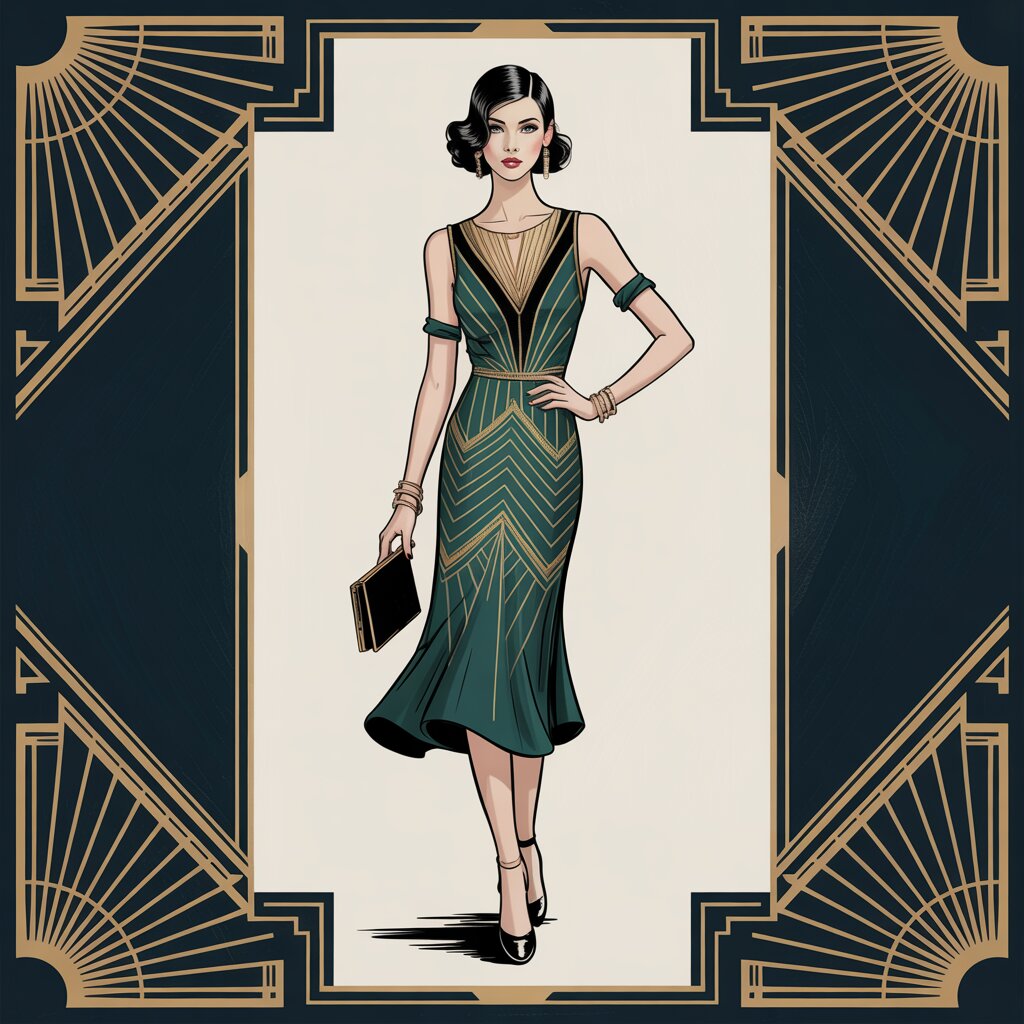
A century later, the Roaring Twenties are roaring again. Ferragamo's Fall/Winter 2026 collection drew directly from 1920s speakeasy culture. The 2026 Actor Awards set a dress code of "Reimagining Hollywood Glamour From the '20s and '30s." And Art Deco geometry keeps surfacing in everything from jewelry to set design. For fashion illustrators, this is a moment worth understanding deeply, because the 1920s didn't just change what people wore. They changed how fashion was drawn.
A Brief History of 1920s Fashion (And Why It Matters Now)
The 1920s were, in many ways, the first modern decade of fashion. Before World War I, women's clothing was defined by corsets, layers, and floor-length skirts. The war forced practical changes: women entered the workforce, hemlines rose out of necessity, and the rigid silhouettes of the Edwardian era gave way to something looser, freer, and frankly more fun.
The signature silhouette of the 1920s was the drop-waist shift dress, which sat at the hips rather than the natural waist. This was revolutionary. It flattened the bust, elongated the torso, and created a columnar shape that was the exact opposite of the hourglass ideal. The body was de-emphasized. The clothing, the movement, and the ornamentation became the focal point.
This coincided with the explosion of Art Deco as a design movement. Originating at the 1925 Exposition Internationale des Arts Décoratifs in Paris, Art Deco brought together geometric precision, luxurious materials, and machine-age optimism. In fashion, this translated to beading arranged in chevrons, sunbursts, and zigzag patterns. Fabrics shimmered. Fringe swayed. Every surface was an opportunity for decorative geometry.
The key designers of this era included Coco Chanel, who championed simplicity and jersey fabric, and Jean Patou, whose sportswear-influenced designs gave women clothes they could actually move in. Madeleine Vionnet pioneered the bias cut, which would transform fashion in the following decade. And the great fashion illustrators of the period, artists like Erté (Romain de Tirtoff) and George Barbier, created images that are still referenced in fashion schools today.
Why 2026 Is Looking Back to the 1920s
Fashion loves a centennial callback. But the current revival feels more specific than mere nostalgia. Several things are driving designers back to this era:
Ferragamo's Fall/Winter 2026 collection is the most direct example. As reported by Hypebeast, creative director Maximilian Davis drew on 1920s speakeasy culture to subvert nautical uniforms and vintage eveningwear. The collection featured elongated silhouettes, Art Deco-influenced detailing, and a sense of glamour that felt simultaneously historical and contemporary. This wasn't costume design. It was a modern reinterpretation of the proportions and spirit of the era.
Meanwhile, the 2026 Actor Awards adopted the dress code "Reimagining Hollywood Glamour From the '20s and '30s," as confirmed by Elle's coverage of the event. The red carpet became a parade of drop-waist references, beaded embellishments, and finger-wave hairstyles updated for current tastes. When an awards show tells celebrities to dress like flappers, you know the trend has moved from runway to mainstream consciousness.
Across Milan Fashion Week, the Fall 2026 shows have leaned into maximalist embellishment, rich textures, and the kind of decorative boldness that was last this prominent a century ago. Dazed's street style coverage from London confirmed that "maximalist dressing is alive and well," with guests opting for "clashing patterns, XXL shapes, and kitschy accessories." This maximalist impulse shares DNA with the Art Deco sensibility: more is more, but arranged with precision.
The Art Deco Silhouette: What to Draw
If you want to illustrate the 1920s revival, you need to understand how its silhouette differs from what we typically draw in contemporary fashion illustration.
The Columnar Body
The 1920s silhouette is built on a vertical rectangle rather than an hourglass. The bust is de-emphasized, the waist drops to the hip, and the overall shape from shoulders to knees is relatively straight. This is a fundamentally different starting point from the 9-head croquis we usually work with, where the waist cinch and hip flare create the classic fashion figure.
How to adapt your croquis: Don't abandon the 9-head system entirely. Instead, when placing the garment, ignore the natural waistline (at head 4) and place the waist seam or belt at the hip level (head 5). Let the fabric from shoulder to hip fall in a mostly straight line, with only the slightest suggestion of the body beneath.
The Dropped Waist
This is the single most defining feature of 1920s fashion. Where modern clothes cinch at the natural waist, the shift dress of the Twenties cinched (or, more accurately, hung) from the hips. Any decorative band, sash, or embellishment sat low.
Drawing tip: When sketching a drop-waist dress, draw the waistline as a horizontal detail at hip level. Keep the bodice loose and straight. Below the dropped waist, fabric can hang straight, pleat, or flare into a shorter skirt. The trick is making the upper body look relaxed, not baggy. Use very subtle fold lines (one or two, maximum) to suggest the fabric hangs from the shoulders but doesn't cling.
Knee-Length Hemlines
The 1920s were the first time in modern Western fashion that women's hemlines rose above the calf. By the mid-decade, skirts sat at or just below the knee. This was scandalous at the time and liberating in practice.
Drawing tip: For an authentic Twenties silhouette, end the hem between mid-calf and the knee. Use fringe, beaded trim, or an asymmetric handkerchief hem to add visual interest at the bottom edge. Modern revivals often extend the hemline to midi or floor length while keeping the columnar shape, so adjust based on whether you're drawing a period piece or a contemporary interpretation.
Rendering Art Deco Embellishment
This is where 1920s fashion illustration gets truly distinctive. Art Deco embellishment is geometric, repetitive, and precise. It's the opposite of organic, freeform decoration. If you're used to drawing flowing florals or watercolor washes, Art Deco will challenge you to work with a ruler, a compass, and a lot of patience.
Core Art Deco Motifs
- Chevrons and zigzags. The simplest Art Deco motif is a repeating V-shape or zigzag pattern. These often appear as beaded bands across the bodice or skirt.
- Sunbursts and fan shapes. Radiating lines from a central point, often placed at the waist or collar. Think of an abstract sunrise rendered in beads or sequins.
- Stepped pyramids. The "ziggurat" shape (stepped triangles stacking upward) is a classic Art Deco architectural motif that frequently appeared in textile designs.
- Concentric circles and arcs. Overlapping semicircles, sometimes called the "scale" or "fountain" pattern, create rhythm across a surface.
- Geometric borders. Greek key patterns, interlocking rectangles, and diamond chains frame the edges of garments, hems, and necklines.
How to Draw Beaded Embellishment
Beading is the soul of 1920s evening fashion. A flapper dress without beadwork is just a sack. But rendering thousands of tiny beads is neither practical nor effective in fashion illustration. The goal is to suggest the beadwork, not draw every bead.
Step 1: Plan the pattern. Lightly pencil in the geometric shapes (chevrons, sunbursts, whatever motif you've chosen). These guidelines ensure your beadwork follows Art Deco precision rather than looking randomly scattered.
Step 2: Dot, don't draw. Use a fine-point pen (a Sakura Pigma Micron 005 is ideal) to place small, deliberate dots along your pencil guidelines. Vary the density: more dots along the pattern lines, fewer in the open areas between. This creates the illusion of a complete beaded surface without literally drawing every bead.
Step 3: Add shine. Art Deco beading was all about light-catching surfaces. Leave small gaps or white spaces within your dot patterns to suggest light reflecting off the beads. If you're working with markers, a white gel pen (like a Sakura Gelly Roll) can add highlights on top of colored areas.
Step 4: Fringe lines. For beaded fringe (the iconic dangling strands of a flapper dress), draw short, evenly spaced vertical lines hanging from the hemline or waistband. Keep them parallel but not robotically identical. Real fringe moves, so introduce the tiniest variations in length and angle to suggest motion.
Drawing the Flapper Pose
The 1920s introduced a new body language to fashion, and your illustrations should reflect that. Flapper poses are fundamentally different from the structured, hips-forward runway walk we often draw today.
Key characteristics of 1920s poses:
- Weight on one foot, with a slight lean. The Charleston stance is exaggerated, but the general idea of asymmetric weight distribution applies. One hip slightly raised, the opposite shoulder slightly dropped.
- Relaxed, expressive hands. Flappers held cigarette holders, cocktail glasses, and long pearl strands. The hands are never stiff or hidden. They gesture, dangle, and accessorize.
- A slight backward lean. Unlike the forward-thrust runway pose, many 1920s poses tilt the torso slightly back, as if recoiling from the viewer with coy confidence. This creates an elegant S-curve that reads as playful rather than aggressive.
- Knee visibility. With hemlines rising to the knee, legs became part of the composition for the first time. Draw legs in motion or crossed, often in T-strap heels with low, chunky heels.
Practice exercise: The Charleston Silhouette
- Draw your 9-head croquis with the weight shifted to the left foot, right knee bent and kicked slightly outward.
- Tilt the torso back about 5 degrees from vertical.
- Place the left hand on the hip and extend the right hand outward and slightly upward, as if holding an imaginary cocktail.
- Dress the figure in a drop-waist shift with beaded fringe at the hemline. Place the waist detail at head 5 (hip level).
- Add a headband with a feather or jeweled ornament. Sketch a pearl strand that loops long, past the dropped waist.
Supplies for Art Deco Illustration
Drawing Art Deco fashion demands specific tools because of the precision involved. Here's what works:
For Geometric Precision
Sakura Pigma Micron Set (6 pens) in the 005, 01, and 03 sizes. The ultra-fine tips let you place individual dots for beadwork and draw clean geometric borders. The archival pigment ink dries matte, which looks more authentic than glossy ink for Art Deco line work.
For Metallic Accents
HIMI Gouache Set (24 colors) includes gold and silver tones that are essential for rendering Art Deco embellishment. Gouache's opacity lets you layer metallic details over darker backgrounds, which is exactly what you need for beaded dresses on evening-tone paper.
For Pencil Planning
Prismacolor Col-Erase Pencils (24 set) are perfect for laying down geometric guidelines that you'll ink over later. The Col-Erase line erases cleanly, even after being drawn over with pen, so your final piece stays crisp.
For Toned Paper Work
Canson XL Mix Media Pad handles both wet and dry media. For a more period-authentic approach, try working on toned tan or gray paper and adding highlights with white gouache or a white gel pen. Art Deco illustrations were often printed on tinted stock.
Learning from the Masters: Erté and George Barbier
No discussion of 1920s fashion illustration is complete without these two artists. Studying their work is the fastest way to internalize the Art Deco illustration style.
Erté (1892-1990) was a Russian-born artist who became synonymous with Art Deco fashion illustration. His work for Harper's Bazaar from 1915 to 1937 defined the era's visual language. What makes Erté's work so distinctive:
- Extreme elongation of the figure (often 12-14 heads tall, far beyond even fashion illustration's typical 9)
- Flat, graphic treatment of fabric, almost poster-like
- Intricate geometric patterns rendered with jewel-like precision
- Bold, limited color palettes (often just two or three hues plus black and gold)
- Decorative backgrounds that integrated with the figure
George Barbier (1882-1932) was a French illustrator whose pochoir prints captured the elegance and decadence of the era. His approach was slightly more naturalistic than Erté's, but equally committed to decorative precision. Barbier excelled at rendering fabric textures within Art Deco's geometric framework, showing that pattern and realism can coexist.
Study exercise: Find reproductions of Erté's Harper's Bazaar covers or Barbier's "Gazette du Bon Ton" illustrations online (many are public domain). Choose one and try to recreate the geometric pattern scheme on a modern silhouette. You'll quickly discover how intentional every line placement was in their work.
Bringing It to Your Sketchbook: A Modern Art Deco Look
Here's a complete project that synthesizes everything we've covered:
- Choose your reference. Look up images from Ferragamo's Fall/Winter 2026 collection for contemporary Art Deco inspiration, or search for original 1920s evening gowns in museum collections (the Metropolitan Museum's Costume Institute has excellent online archives).
- Sketch the croquis. Use the backward-leaning flapper pose described above. Keep the figure elongated, in the 9-10 head range.
- Design the garment. A drop-waist silhouette with a straight or slightly A-line skirt. Add a geometric neckline (V-neck or bateau) and cap sleeves or thin straps.
- Plan your embellishment. Pencil in a sunburst motif radiating from the dropped waist, or chevron bands at the neckline, waist, and hem. Keep the pattern Art Deco: geometric, symmetric, precise.
- Ink the outlines. Use a Micron 03 for garment contours, 01 for construction details, and 005 for beadwork dots and pattern lines.
- Add tone. If working with markers, lay a base tone for the dress in a jewel color (emerald, sapphire, or deep gold). Add darker values in the fold areas under the bust and at the side seams. Use a metallic marker or gold gouache for the embellishment patterns.
- Accessories. A long pearl rope, T-strap heels, a feathered headband. These details seal the era.
- Erase guidelines and clean up. Step back and check: does the silhouette read as 1920s? Is the embellishment geometric and precise? Does the pose convey relaxed glamour?
Why This Matters for Your Portfolio
Fashion illustration portfolios that show range get noticed. Most student and early-career portfolios are full of contemporary streetwear or bridal. An Art Deco project demonstrates that you can research historical fashion, adapt your drawing style to match a specific era, and translate runway trends into illustration. These are exactly the skills that editorial clients and fashion houses want to see.
With the 1920s revival clearly in play on both the runway and the red carpet, now is an excellent time to add Art Deco work to your portfolio. The trend gives you commercial relevance (editors are actively looking for Deco-inspired illustrations right now), while the historical depth gives you artistic credibility.
Practice These Techniques on Professional Templates
Our Fashion Croquis Template Sketchbook: Paris Edition provides ready-made 9-head figures on scenic Parisian backgrounds. Perfect for experimenting with Art Deco garment designs without worrying about figure proportions.
Get the Paris EditionSources
- Hypebeast: "Ferragamo Explores 1920s Speakeasy Culture for Fall/Winter 2026" (March 2, 2026). Maximilian Davis's collection subverts nautical uniforms and vintage eveningwear.
- Elle: Coverage of the 2026 Actor Awards dress code, "Reimagining Hollywood Glamour From the '20s and '30s," with analysis of the 15 best-dressed stars.
- WWD: Milan Fashion Week Fall 2026 coverage, including Ferragamo show reporting and Bernstein analyst assessment of Demna's Gucci debut.
- Dazed Digital: "Maximalist dressing is alive and well in London" street style coverage, noting clashing patterns, XXL shapes, and kitschy accessories at London Fashion Week AW26.
- Harper's Bazaar: "Ferragamo Gave All the Glamour in Milan" and coverage of Giorgio Armani's show in Milan.
Some links above are affiliate links. If you purchase through them, we may earn a small commission at no extra cost to you. We only recommend products we genuinely use or believe in.